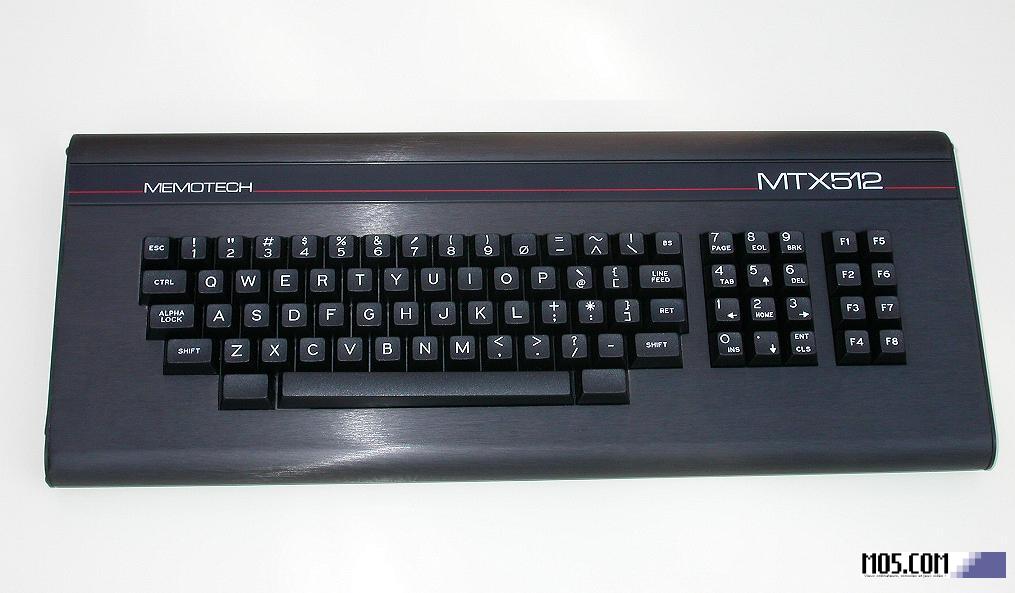
|
 |
The Memotech MTX Series |
 |
The Memotech Node
Ring Network

The
Cambridge Ring was an experimental
Local
Area Network (LAN), developed at the
Computer Laboratory, University of Cambridge in the 1970's
and 80's. It was a ring network that allowed the transmission of
packets of data between the nodes in the ring over predominantly
twisted pair cables.
The Cambridge Ring was capable of
operating at 10 megabits/second using powerful hardware far
beyond the capabilities of the Memotech MTX. The
Internet Archive
Wayback Machine has archived an
article by David Greaves from 1999 which describes the
Cambridge hardware.
Inspired by the Cambridge Ring,
Robert Branton led the
development of a token ring network for the Memotech MTX, which,
although designed at the Memotech facilities in Witney, was
originally called the Oxford Ring. The
name appears to have been changed to the Memotech Ring by the
time that the Operator's
Manual was published.
Branton led a small team, including Tony
Brewer, that developed the Memotech implementation designed to
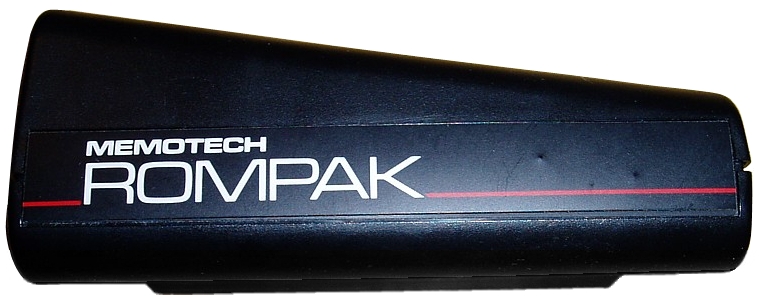
run on the MTX with no additional hardware, other than the ROM
pak containing the firmware. According to Tony1,
"The work was complicated and took several months. The Zilog
in-circuit emulator (ICE) was essential. We managed to complete
the work just before the somewhat temperamental ICE stopped
working for good."
Using the available MTX RS232
communications hardware, the ring communication mechanism used
single-core coaxial cable at a rate of 19,200 bits per second,
according to the manual, equivalent to a maximum data rate of
about 30,000 bytes per minute. As noted by Tony1,
"The Ring was not super fast but it worked well." By way of
comparison, an unmodified Commodore 64 disk drive transfer rate
was about 300 bytes/second or 18,000 bytes per minute - i.e..,
Node was almost twice as fast!
Tony also notes that "When finished we
did a demo involving 12-16 MTX's in one large room at Witney. It
was shown to one of Memotech's investors and the local MP (Douglas
Hurd), possibly the USA rep as well."
It is likely that the intended market for
the networking capabilities was education/schools, but sadly the
MTX lost out to competing hardware, particularly the BBC Micro.
Some notes on the Memotech Ring
connections can be found on this page.
Some notes on the Node variables and Ring
packet structure can be found in the Technical Note created by
Bill Brendling available on the
Manuals page.
References :
1. E-mail discussion with Tony Brewer,
October 2025
|